ISM Blog & News
Why We Suddenly Become Fans: An Interview with Prof. Dr. Nicole Behringer
The World Cup has long been more than just a sporting event. It fosters a sense of community, creates emotional moments, and attracts enormous attention—both in the stadium and on social media. But why do even people who rarely watch soccer get caught up in the excitement? What psychological mechanisms lie behind the sudden sense of unity that emerges during the World Cup? And why do sporting events often even influence our consumer behavior?
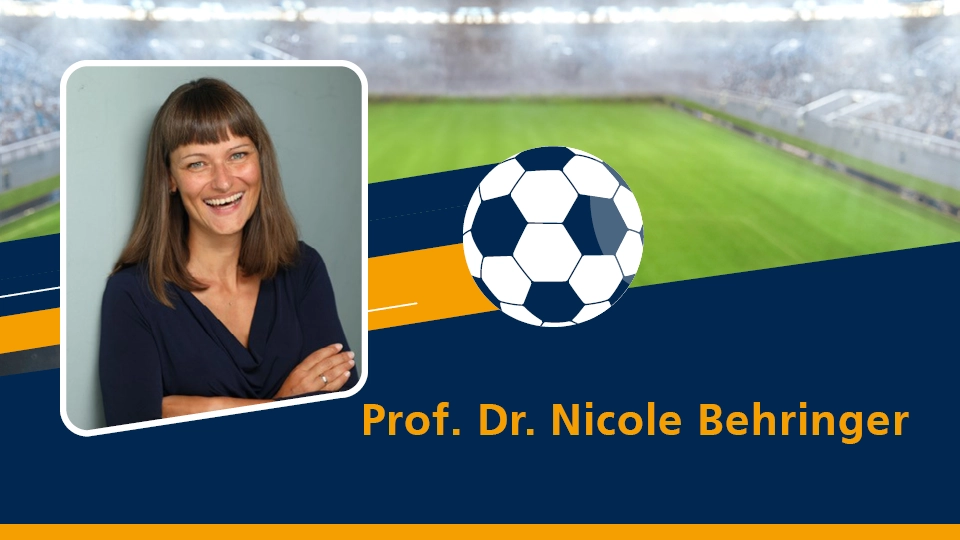
In this interview, Prof. Dr. Nicole Behringer, professor of Business Psychology at ISM Stuttgart and Head of the distance learning program M.Sc. Media and Communication Psychology, explains why even non-fans suddenly get excited during a Football World Cup, which psychological effects lie behind the strong sense of community, and why major sporting events trigger such powerful emotions. She also explains how social media changes our sports experience and why emotions surrounding the World Cup also influence our consumer behavior.
ISM: Why do even people who normally hardly watch football get excited during a Football World Cup?
Prof. Dr. Nicole Behringer: During a Football World Cup, people are not simply watching football. They experience four things: community, emotions, excitement, and a rare and special event. That is exactly what causes even occasional viewers to get caught up in the excitement.
During a World Cup, something happens that we call “social identity”: people suddenly feel like part of a large group, for example “we Germans.” This sense of “we” provides security and creates connection. In addition, there is the power of shared emotions. When friends, family members, or colleagues are excited, this enthusiasm often spreads automatically. During public viewing events, people jump up, scream, cheer, and laugh together. Even if you barely know the rules, you can feel the energy. Ideally, a football match is also exciting because we do not know who will win. Tension and uncertainty create strong emotions; unpredictable twists activate dopamine and adrenaline, making us feel good and alive. Our brains love drama.
And finally: a World Cup is rare and special. It is an event. And things that only happen every four years seem more important. People want to be part of it, to join the conversation, and not miss out on anything.
ISM: Which psychological effects cause us to suddenly strongly identify with a team or a nation during a World Cup?
Prof. Dr. Nicole Behringer: One important effect is so-called social identity: people define themselves not only through their own personal characteristics, but also through groups they feel they belong to. A national team offers a simple surface for projection. Fans identify with the team, and it becomes part of their own self-image. “The team” then becomes “we.”
Closely connected to this is the psychological effect called Basking in Reflected Glory – “basking in the glory of others.” People experience the successes of a group they identify with partly as their own successes. When their team wins, it can strengthen their personal self-esteem. That is why after a victory we naturally say: “We won.”
And lastly: the World Cup is full of symbols and rituals that strengthen identification even further. Think of jerseys, flags, anthems, or personal rituals surrounding the matches – lucky socks, decorations, or barbecue parties. This makes belonging visible and emotionally tangible. Such actions create bonds because we do not only think identity, we actively express it.
ISM: Why do major sporting events like a World Cup trigger such strong emotions?
Prof. Dr. Nicole Behringer: Psychologically, sport is an ideal format for emotions. The decisive difference compared to films or series is that the outcome is open. This real uncertainty creates suspense, tension, and euphoria. In addition, there is the power of narratives. Sport delivers everything in real time that makes a good story and therefore triggers strong emotions: underdogs, rivalries, hopes, setbacks, surprising twists, and heroic moments. Such clear stories captivate us particularly strongly. Because all of this happens live, the emotions feel more immediate and intense. A late goal or a missed penalty is not just a moment in the game, but a real turning point experienced simultaneously by millions of people. This shared live experience is exactly what makes major sporting events so emotionally gripping.
ISM: How do these emotions influence our consumer behavior – for example when buying fan merchandise or through sponsorship?
Prof. Dr. Nicole Behringer: Strong emotions during a World Cup or even the anticipation beforehand strongly influence our consumer behavior. Who does not know someone who bought a bigger television for such an event? When we feel euphoric or excited, we often make more spontaneous and less rational decisions. A jersey or scarf is then no longer perceived simply as a product, but as a symbol of belonging, euphoria, or the memory of a special moment. In addition, there is the influence of the group. When people everywhere are wearing fan merchandise or brands are highly visible in the World Cup environment, this behavior quickly appears normal and attractive.
Psychology calls this social proof: if many people are doing something, it must be right, which increases the willingness to join in. Another psychological mechanism comes into play with sponsorship: emotional transfer. Major sporting events are emotionally charged with euphoria, suspense, or pride. Brands that are present in this environment benefit because these positive feelings can unconsciously transfer to them. This makes a brand appear more likable, familiar, or attractive, even if the actual product has nothing to do with football. That is exactly why sponsorship at major sporting events is so valuable for companies.
ISM: What role do social media and viral trends play in the way we experience sporting events?
Prof. Dr. Nicole Behringer: Social media has transformed sport from passive viewing into active participation. In the past, people were simply spectators; today they comment, share, and react in real time. When millions of people cheer, discuss, or express outrage simultaneously, events automatically feel bigger and emotionally more intense. This strengthens the feeling of being part of the action live.
In addition, there is the dynamic of viral trends. Individual moments – a spectacular goal, a misplaced pass, or a special gesture – are massively shared in the form of memes, clips, or reels. As a result, people do not only experience the game itself, but also the digital story that develops around it. They actively participate. Sport thus becomes a shared topic of conversation far beyond traditional fans.
At the same time, social media creates a certain real-time pressure. Those who are not following live quickly feel like they are missing out. This feeling is also known as FOMO (Fear of Missing Out). Platforms also amplify whatever is liked and shared most often. As a result, certain scenes remain present longer and shape how we perceive a sporting event and what we remember about it.
The interview with Prof. Dr. Nicole Behringer shows how closely sport, emotions, media, and consumption are connected today. Major events such as a Football World Cup clearly demonstrate the influence that a sense of community, digital communication, and emotional brand attachment have on our behavior – far beyond sport itself.
The interview was conducted by Laura Wortkötter.

Questions about studying?
Contact us!
Whether in a personal consultation, by phone, email, or WhatsApp - we are always available to answer your questions and are happy to provide you with individual support on your path to university!
Please feel free to send us a message from Monday to Friday. We are always available on weekdays from 10:00 a.m. to 3:00 p.m. German time (CET).

The first AACSB-accredited private German university of applied sciences