ISM Blog & News

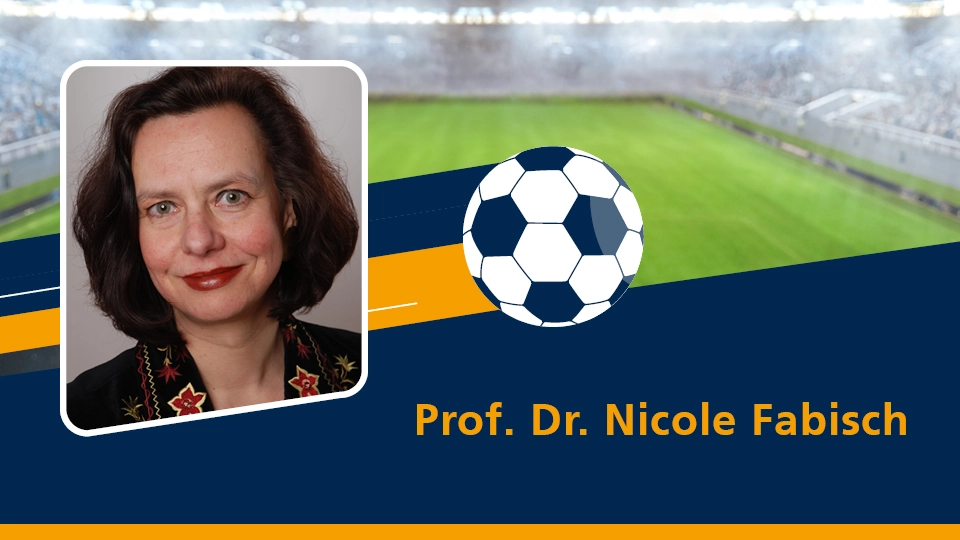
Between Brand Reach and Reputation Risk: An Interview with Nicole Fabisch

Sports sponsorship today goes far beyond traditional pitch-side advertising or jersey sponsorships. Social media has not only created significantly more communication channels, but has also made sponsorship formats increasingly complex. Companies now have to consider a wide range of factors. Football is no longer just emotional. It has also become increasingly political. As a result, fans care more and more about players’ values and whether they come across as authentic.

In this interview, Nicole Fabisch, Professor of Marketing and Sustainability Management at ISM Hamburg, discusses why football players themselves have become brands, the opportunities and risks World Cup sponsorships present for companies, and why authenticity matters more than ever. She also explains what makes brand positioning credible and what defines a successful World Cup campaign today.

ISM: Are brands focusing more on individual players today or on traditional team sponsorship strategies?

Prof. Dr. Nicole Fabisch: Internationally, many brands are now investing more heavily in individual athletes instead of relying solely on traditional team or club sponsorships. I’m thinking, for example, of Pepsi’s current campaign featuring David Beckham and Florian Wirtz, or Budweiser’s World Cup YouTube campaign with Jürgen Klopp and Erling Haaland. Today, well-known footballers are brands in their own right, often reaching audiences of more than 100 million followers on social media. They can connect with fans directly and authentically, even outside match days. Stars such as Lionel Messi and Cristiano Ronaldo, but also younger players like Jamal Musiala or Florian Wirtz, can often reach more people with a single Instagram or TikTok post than an entire club can. This allows brands not only to build a more emotional connection with fans, but also to market their products as sporty and modern. Many fans look to their favorite players for inspiration when it comes to fashion and lifestyle products.

At the same time, traditional team sponsorship remains extremely important. National teams and clubs such as Borussia Dortmund or FC St. Pauli create a sense of community and long-term fan loyalty. Especially during a World Cup, a powerful sense of collective identity emerges, which is something companies can benefit from.

However, criticism of individual players is also increasing. Many top stars are perceived as having lost touch with reality or moving to countries like Saudi Arabia for extremely high salaries. As a result, some fans view them as mercenaries motivated purely by money. This is precisely why many companies now combine both strategies. Teams stand for identity and unity, while individual stars deliver reach and attention. For example, adidas sponsors both the German national team and stars such as Messi or Wirtz. World Cup sponsorship is expensive and is increasingly dominated by platform and financial companies, many of which for 2026 will come from the United States, the Middle East or Asia.

ISM: Which political or social issues are likely to play a role this year and how sensible is it for companies and players to position themselves publicly on these topics?

Prof. Dr. Nicole Fabisch: The World Cup 2026 is likely to be politically charged, particularly because of the host countries: The United States and Mexico. Issues such as U.S. deportation policies, racism and discrimination are expected to receive attention, as will the commercialization of football and rising ticket prices. The tournament is also criticized for its environmental impact due to high CO2 emissions and large-scale land use. In Mexico, international attention will focus on the country’s domestic challenges, including organized crime, corruption and social inequality. At the same time, Mexico aims to present itself as a modern and open-minded host nation during the tournament. FIFA itself also faces ongoing criticism for lacking transparency, being vulnerable to corruption and appearing overly accommodating to powerful interests.

This is exactly where the challenge lies. Major sporting events automatically draw international attention to political and social issues. Football today is about far more than sport alone. Around the World Cup, topics such as human rights and diversity are increasingly central. During the tournament in Qatar, for example, there was controversy surrounding the rainbow armband worn by captains as a sign of solidarity with the LGBTQ community, as well as the German national team’s silent protest gesture following FIFA’s ban.

Fans now increasingly expect associations and players to positions themselves. Social media reinforces this trend. Football stars reach millions of people and younger fans in particular believe public figures should use their platforms responsibly and represent clear values.

For companies, taking a political stance can make sense as long as it is credible and authentic. Brands should clearly communicate what they stand for while backing this up through real projects or partnerships. Problems arise when companies position themselves purely for marketing purposes and engage in purpose-washing or sports-washing without any genuine intention to create change.

For both players and brands, this remains a balancing act. On the one hand, they can support important social debates and act as role models. On the other hand, they risk hate campaigns from fans, criticism in the media or conflicts with clubs and associations. Overall, however, it has become clear that football and politics can hardly be separated anymore.

ISM: How much personality can a player show before it becomes a risk for sponsors?

Prof. Dr. Nicole Fabisch: Personality is more important for football players today than ever before. Fans no longer want interchangeable professionals. They want authentic characters with their own opinions, style and recognizable digital identity.

That is why players who stand out and evoke emotions are highly attractive to sponsors. Footballers such as Thomas Müller are perceived as especially approachable and likable because of their authentic and relaxed personalities. This makes them extremely appealing for brands, as image transfer works particularly well through consistent content. Audiences genuinely believe Müller’s portrayal of a sociable family atmosphere in Telekom’s current World Cup campaign.

At the same time, there are clear limits. The more polarizing or controversial a player becomes, the greater the risk for sponsors. The player’s personality also has to fit the brand. What works well for an energy drink company may be completely unsuitable for a bank. Image transfer can also work negatively. Through social media, statements or scandals spread globally within minutes. A careless comment or provocative political statement can quickly generate damaging headlines. Antonio Rüdiger, for example, has repeatedly made headlines in the German tabloid press because of impulsive gestures or remarks. Nevertheless, Under Armour signed him and even gave the campaign the fitting slogan: “Be the Problem.” Players may certainly express strong opinions, but from a sponsor’s perspective they also need to demonstrate emotional control in order not to become a reputational risk. For politically engaged players with strong convictions, this can be a difficult balancing act.

Fans appreciate players who display genuine personality and authenticity. For sponsors, they become problematic when their statements or behavior no longer align with the company’s values or provoke excessive controversy.

ISM: What opportunities and reputational risks come with corporate positioning around the FIFA World Cup?

Prof. Dr. Nicole Fabisch: The World Cup is one of the most high-profile sporting events in the world and allows companies to achieve enormous visibility within a very short period of time. Emotional advertising campaigns can increase brand awareness and build strong connections with consumers. Football stands for community, passion and team spirit. These are values companies actively seek to associate with their brands. In addition, the tournament provides direct access to younger audiences, as much of the content is shared through platforms such as Instagram, TikTok and YouTube.

At the same time, strong positioning around the World Cup also creates reputational risks. Since the 2022 tournament in Qatar, companies have faced increasing scrutiny regarding the events and organizations they choose to support. FIFA itself is already viewed critically by many people. Issues such as human rights concerns, allegations of corruption and lack of sustainability can lead to public criticism of associated brands. Companies also risk appearing hypocritical if their advertising messages do not align with their actual corporate behavior. Individual players may likewise become liabilities through scandals or controversial statements. Moreover, football fans react sensitively to excessive commercialization or inauthentic campaigns. Audiences today expect more than simple feel-good advertising. Younger target groups in particular quickly recognize when emotions are being used merely as a marketing tool.

ISM: In your opinion, what defines a successful World Cup campaign today?

Prof. Dr. Nicole Fabisch: Truly successful World Cup campaigns need, in my view, a compelling story, clear values or strong personalities. Otherwise, they are rarely memorable. At the same time, the content must feel relevant to the target audience. Football naturally provides that relevance for most fans, but companies should also choose topics and personalities that fit both consumers’ lifestyles and the brand’s identity. Ideally, campaigns also incorporate humor, as seen in classic Nike ads, Commerzbank’s “Ponytails” campaign during the FIFA Women's World Cup, or the current adidas spot “Backyard Legends” featuring stars like Timothée Chalamet, Bad Bunny and Lamine Yamal.


Purely brand-focused campaigns built around logos and stadium advertising no longer work today. Successful campaigns create social media content, react quickly to goals and major World Cup moments, and become part of both sports culture and pop culture.


Overall, the FIFA World Cup can be an extremely successful marketing platform for companies if communication is credible, socially aware, creative and internationally accessible. The decisive factor is that the positioning genuinely aligns with the identity and values of the brand.

One thing becomes particularly clear in the interview with Prof. Nicole Fabisch: football evokes powerful emotions. To what extent these emotions also influence our consumer behavior during the World Cup is something you can explore further here.

The interview was conducted by Gina-Marie Heckel.

Questions about studying?
Contact us!

Whether in a personal consultation, by phone, email, or WhatsApp - we are always available to answer your questions and are happy to provide you with individual support on your path to university!

WhatsApp

Please feel free to send us a message from Monday to Friday. We are always available on weekdays from 10:00 a.m. to 3:00 p.m. German time (CET).

Request a consultation
Our study advisors are happy to answer all your questions about the ISM and our programs as well as financing options in a personal online appointment. Do not hesitate to contact us!
AACSB accreditation logo

The first AACSB-accredited private German university of applied sciences

CHE University ranking
Excellent results for lecturer quality & practical relevance
Logo Universum
Ranked as one of the best private German universities
Excellent results in the Global Multirank